Wordament® by Microsoft
Microsoft CorporationWord
4.25.77K Reviews
- Version
- 4.5.8051
- Installs
- 1.00M
- Age Rating
- Everyone
Screenshots
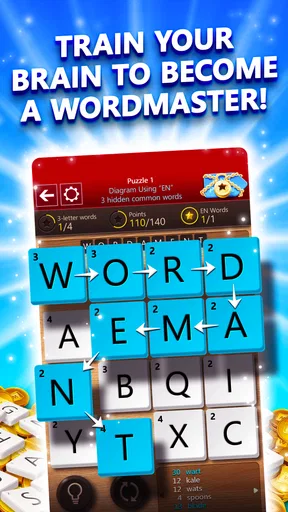
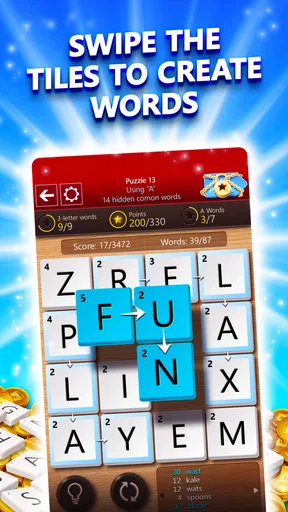
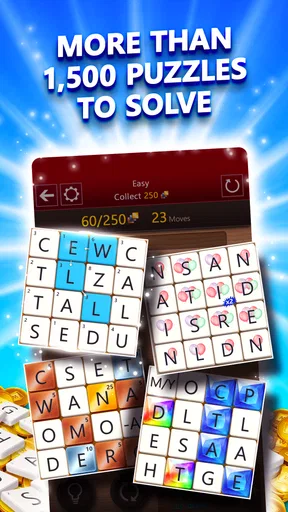
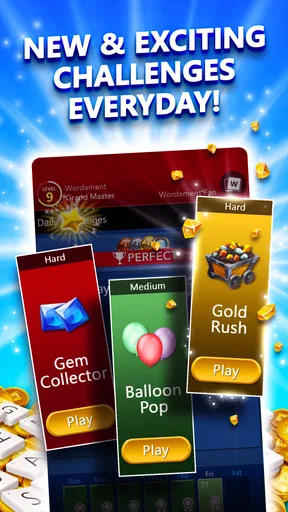
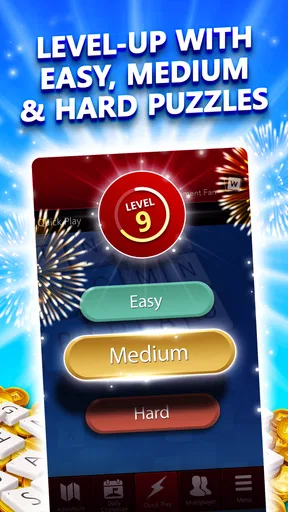
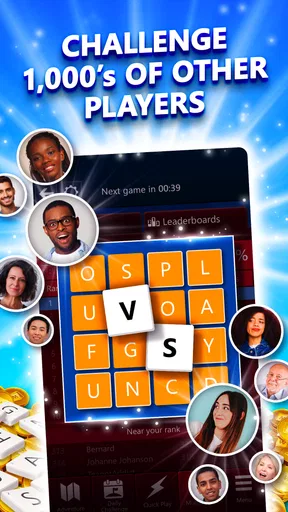
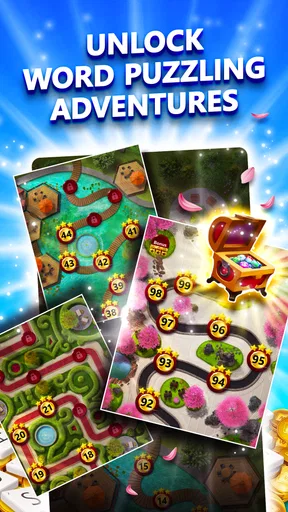
Our Review of Wordament® by Microsoft
 Analysis by Appyee
I keep coming back to Wordament® for a very specific reason: it turns word searching into a quick test of attention rather than a slow, solitary puzzle. The basic idea is easy to understand, but the pressure of scanning a crowded board, spotting useful letter paths, and deciding whether a word is worth entering gives each round a surprisingly sharp rhythm. I found it most enjoyable in short sessions, when I wanted something mentally active without committing to a long story, complicated ruleset, or elaborate setup.
Developed by Microsoft Corporation, this free word game sits somewhere between a traditional word-search puzzle and a competitive brain-training session. It is suitable for everyone, and the broad age rating makes sense because the central challenge is vocabulary and visual recognition rather than mature content. The game has been available since October 4, 2013, so it is not a new experiment trying to discover what a mobile word game should be. It is an established format that has had time to become focused, familiar, and easy to pick up.
My overall view is positive, with one important qualification: this is best for players who enjoy speed, repetition, and the small satisfaction of finding one more word before moving on. If you want a calm crossword-style experience, a deep solo campaign, or a game built around carefully planned turns, this may feel too brisk and narrow. For everyone else, it offers a clean way to fill a few spare minutes while still making your brain work.
How the word-search format feels in everyday play
The appeal comes from the balance between simplicity and urgency. You see a field of letters and search for words by tracing connected paths. The rules are approachable enough that I could begin playing without studying a tutorial for long, yet the board does not become automatic after a few attempts. I still had to switch between broad scanning and close inspection, especially when familiar short words were hiding among less obvious combinations.
That makes the game useful in situations where I would normally reach for a passive distraction. On a short commute, while waiting for an appointment, or during a break between tasks, I can play a round and stop without losing the thread of a story. A session does not demand the emotional investment of a role-playing game or the concentration required by a long crossword. It gives me a compact mental reset instead.
The most effective habit is to avoid staring at the whole board in the same way. I get better results by scanning for common letter clusters first, then checking nearby diagonals and turns. Looking only for long, impressive words is usually a mistake. Shorter discoveries help establish the board’s structure, and once I notice a promising group of letters, I can inspect the surrounding paths more intelligently.
This is one of the less obvious strengths of the format: it rewards a change in visual strategy more than a huge vocabulary alone. A player who methodically sweeps rows, columns, diagonals, and corners can often outperform someone who knows many words but searches randomly. I found that useful because improvement feels tied to a learnable process rather than pure luck.
The store summary describes thousands of words to search, find, and puzzle through, with the option to play alone or alongside friends. In practice, the large word pool is important because it keeps the challenge from collapsing into the same handful of obvious answers. Some rounds feel welcoming, while others expose gaps in my vocabulary or make me question whether a strange-looking combination is actually valid.
That uncertainty can be satisfying, but it also creates a trade-off. Word games depend on a dictionary standard, and players will not always agree with every accepted or rejected word. If you prefer puzzles where every answer feels immediately familiar, unusual vocabulary may occasionally interrupt the flow. I see that as part of the genre, although it can be frustrating when a round seems to reward obscure knowledge more than clever searching.
Why the competitive element changes the experience
The social side gives the game more energy than a conventional word-search book. Playing alone lets me concentrate on personal improvement, while playing with friends adds a reason to take risks and search more aggressively. I enjoy that the competition is based on recognition and speed rather than complex controls. Someone who has never played a mobile game can understand the central action almost immediately.
There is also a useful distinction between finding many easy words and chasing harder discoveries. In a relaxed session, I can simply collect whatever appears naturally. When I want to compete, I pay more attention to unusual paths, longer combinations, and areas of the board that I might otherwise ignore. That creates a natural way to adjust the intensity without changing the basic rules.
My practical advice is to treat the first pass as reconnaissance. I quickly collect obvious words, but I do not spend too long polishing one section of the board. Then I return to the areas with dense clusters or awkward turns. This two-stage approach works better for me than trying to inspect every letter equally from the beginning, and it is especially helpful when the timer or competitive pressure makes hesitation costly.
Another useful approach is to use the game as a vocabulary exercise without turning it into formal study. After a round, I mentally note unfamiliar words that appeared and watch for their letter patterns in later boards. I would not call this a replacement for a dictionary or language course, but it gives vocabulary practice a more active context. The words are connected to a visual search problem, which makes some of them easier to remember.
Players should also understand that speed changes the personality of the game. Fast decisions create excitement, but they can make the experience tiring if I play for too long. My attention starts to narrow, and I become more likely to miss simple words while chasing difficult ones. Short bursts work better than marathon sessions for me. The game is strongest as a repeatable pocket activity, not necessarily as an all-evening commitment.
The interface and learning curve
The controls are naturally suited to touchscreens because the main action is tracing letters. I did not need a complicated control scheme, and that matters on a small phone where buttons and menus can become irritating. The core interaction is direct: look, decide, trace, and move on. That clarity is one reason the game remains approachable for casual players.
At the same time, a touch-based word search can be less forgiving than using paper. My finger sometimes covers the next letter, and a hurried gesture can make me doubt whether I followed the intended route. Players with larger fingers or smaller screens may need to slow down slightly, particularly when several letters sit close together. This is not a deal-breaker, but it is a genuine reason the experience may feel better on one device than another.
The current version is 4.5.8051, and the game supports devices running Android 7.0 or later. That makes it accessible to many Android users, although anyone with an older phone should check compatibility before planning to install it. On a supported device, the relatively straightforward design should feel less demanding than a graphically intensive game, but the important point is still whether the screen gives enough room for comfortable tracing.
I also appreciate that the game does not require me to learn a large collection of systems before the word challenge becomes enjoyable. There are no lengthy character builds or resource loops distracting from the central activity. That focus is a strength for people who want a word game specifically. It is a weakness for players who need constant novelty through new mechanics, unlockable worlds, or a strong sense of progression.
Where the free model needs careful attention
The game is free to download, which makes it easy to try without making a commitment. There are in-app purchases ranging from $1.99 to $9.99 per item. I would approach those purchases deliberately rather than assuming they are necessary for the basic experience. The core question is whether the free play loop already gives you enough value; for many casual players, it may be smarter to spend time with the game first and decide later.
This matters particularly for families. The everyone rating makes the content broadly suitable, but a child using a device with purchasing enabled can still create an unwanted expense if adults do not manage that setting. I would treat the age rating and purchase controls as separate considerations: one describes the nature of the content, while the other concerns how the game is used on a shared device.
For me, the larger limitation is not the price model but repetition. The central pleasure comes from doing the same fundamental thing on many boards. That is exactly what dedicated word-game fans want, yet players who need a changing narrative or a series of dramatically different challenges may lose interest. The social option can extend the life of the game, but it does not transform the underlying activity into a different genre.
There is also a performance trade-off in competitive play. The faster I try to move, the more likely I am to make an input mistake or overlook a word. That can make a result feel less like a pure measure of vocabulary and more like a combination of eyesight, touch accuracy, and reaction speed. I enjoy that mixture, but anyone looking for a purely intellectual puzzle should know that dexterity and tempo are part of the test.
Who will get the most from it
I would recommend this to people who like word searches but want more urgency than a printed puzzle provides. It is also a good fit for friends who enjoy comparing results without learning a complicated multiplayer game. The rules are simple enough for a mixed group, while the difference between a beginner and an experienced player can still produce friendly competition.
It works particularly well for short daily routines. I can play during a coffee break, stop after a round, and return later without needing to remember a plot or rebuild a strategy. Someone trying to reduce passive scrolling may find this a better replacement because it occupies the hands while demanding active observation. The benefit is modest but real: the break feels like a small challenge rather than empty screen time.
Language learners may also find a secondary use for it. I would not rely on it as a structured learning tool, since discovering a word does not automatically explain its meaning or usage. However, it can expose players to unfamiliar spellings and encourage them to look up words afterward. The strongest workflow is to keep a small note of new terms and review them separately, instead of expecting the game itself to provide full instruction.
I would be more cautious about recommending it to someone who dislikes timers, rankings, or repeated pattern recognition. A slower crossword app may be a better choice if you want to sit with one clue and reason through it carefully. A traditional word-search app may suit you better if you want a completely relaxed pace. And if your priority is a rich social game with communication, teamwork, or a persistent shared world, this offers too little depth in those areas.
It is also not my first choice for a player who needs a strong progression system. The satisfaction here comes from improving my eye, expanding my vocabulary, and doing better on the next board. If you need unlockable characters, story chapters, or a clear campaign endpoint, you may find the loop too self-contained. That is not a flaw in execution so much as a matter of matching expectations to the design.
My verdict after weighing the strengths and friction
With an average rating of 4.2 from around 81 thousand ratings and more than a million installs, the game has clearly found a substantial audience. Those figures do not decide whether it belongs on your phone, but they fit my experience of a polished, accessible word title with a durable core idea. It is easy to start, difficult to master completely, and flexible enough to support both solo sessions and friendly competition.
The strongest evidence in its favor is the quality of the central loop. Searching a board, spotting a path, and immediately trying another round creates a satisfying rhythm. I also like that improvement comes from practical habits: scanning intelligently, recognizing clusters, balancing easy finds against ambitious ones, and managing attention before fatigue sets in. Those details give the game more depth than its simple controls initially suggest.
The meaningful weakness is that the same focused design can become repetitive. The competitive pace may also favor players with quick touch control and strong visual scanning, not just broad vocabulary. Purchases are available, so families should pay attention to device settings, and players who dislike recurring word-search sessions should choose a different kind of puzzle instead.
Still, I think the free entry point makes it worth trying for almost anyone curious about the format. Give it a few short sessions rather than judging it after one board. If you enjoy the feeling of finding a hidden word under pressure, you will probably understand its appeal quickly. If you want a calmer, more varied, or more story-driven experience, the usual crossword, untimed word-search, or narrative puzzle alternatives will likely serve you better.
My final recommendation is straightforward: choose Wordament® when you want fast, repeatable vocabulary play that rewards sharper scanning over complicated strategy. I would keep it installed as a compact mental break, especially for playing with friends or filling a few idle minutes. It does not try to be everything, and that focus is exactly why it works—provided its brisk pace and repeated board format match the way you like to play.
Verdict
Strengths of Wordament® by Microsoft
- Fast, bite-sized word puzzles are ideal for short gaming sessions.
- Multiple board formats keep the gameplay from feeling repetitive.
- Global leaderboards add strong competition for score-focused players.
- The interface is clean, responsive, and easy to understand.
- Helpful word lists can improve vocabulary while you play.
Limitations of Wordament® by Microsoft
- Some rounds can feel repetitive after extended play sessions.
- High scores often depend on memorizing common short words.
- Competitive events may feel stressful for casual players.
- An internet connection may be needed for online features.
- Ads or optional purchases can interrupt the otherwise simple experience.
Other Releases by Microsoft Corporation
View All
Microsoft OneDrive
Productivity4.6

Microsoft OneNote: Save Notes
Productivity4.6

Link to Windows
Productivity4.0

Microsoft PowerPoint
Productivity4.8
Similar Picks in This Category
View All
Word Search - Word Puzzle Game
Bluetile4.8

Word Search Quest - Puzzles
Blackout Lab4.8

CodyCross: Crossword Puzzles
Fanatee, Inc.4.7

Words of Wonders: Crossword
Fugo Games4.9

Wordscapes: Word puzzle game
PeopleFun4.7

Word Search Explorer
PlaySimple Games4.9
Frequently Asked Questions
What is Wordament® by Microsoft?
Wordament® is a competitive word puzzle game from Microsoft in which you search for words on a letter grid. Each round challenges you to find as many valid words as possible before time runs out. Your score is compared with other players, making it suitable for people who enjoy quick vocabulary challenges, leaderboard competition, and short gaming sessions.
Is Wordament® free to download and play?
Wordament® is generally available as a free download on supported Android and iOS devices, although availability and included features may vary by region and platform. The game may contain advertising or optional purchases, so it is worth checking the current store listing before installing. An internet connection may also be required for online competitions and account-related features.
Do I need a Microsoft account to play Wordament®?
You may be able to start playing without immediately creating an account, but signing in with a Microsoft account can provide additional benefits. Depending on the current version, account integration may support achievements, progress synchronization, leaderboards, and other Xbox or Microsoft gaming services. If privacy is important to you, review the permissions and account requirements before signing in.
Can I play Wordament® offline?
Wordament® is primarily designed around online competition, so its most important features usually depend on an internet connection. Without connectivity, you may be unable to participate in live tournaments, submit scores, view rankings, or synchronize progress. Some versions or situations may allow limited access, but users should not expect the complete Wordament experience to work reliably offline.
Is Wordament® suitable for children and casual players?
Wordament® is easy to understand and can be enjoyable for casual players, vocabulary fans, and families who like word games. However, the appropriate age rating, advertising, online functionality, and account requirements should be checked in the Google Play Store or Apple App Store. Because scores are compared with other players, parents may also want to review online and privacy settings.
Play our best games!


